By Lisa Flynn Namm, Founder and Chief Brand and Trust Officer, LFN Consulting
When I walk into an organization where growth has stalled, I rarely notice the marketing first.
I notice the CEO.
They're exhausted in a specific way — not from working too little, but from working hard in a direction that isn't adding up. Marketing wants more content. Sales wants more leads. HR is fighting to keep people who used to stay.
Every function is busier than it's ever been, and somehow the whole organization feels heavier instead of lighter. Nobody is failing. Everybody is tired. And growth still isn't moving the way the effort suggests it should.
I used to think that meant something was broken.
Now I think something was simply never built.
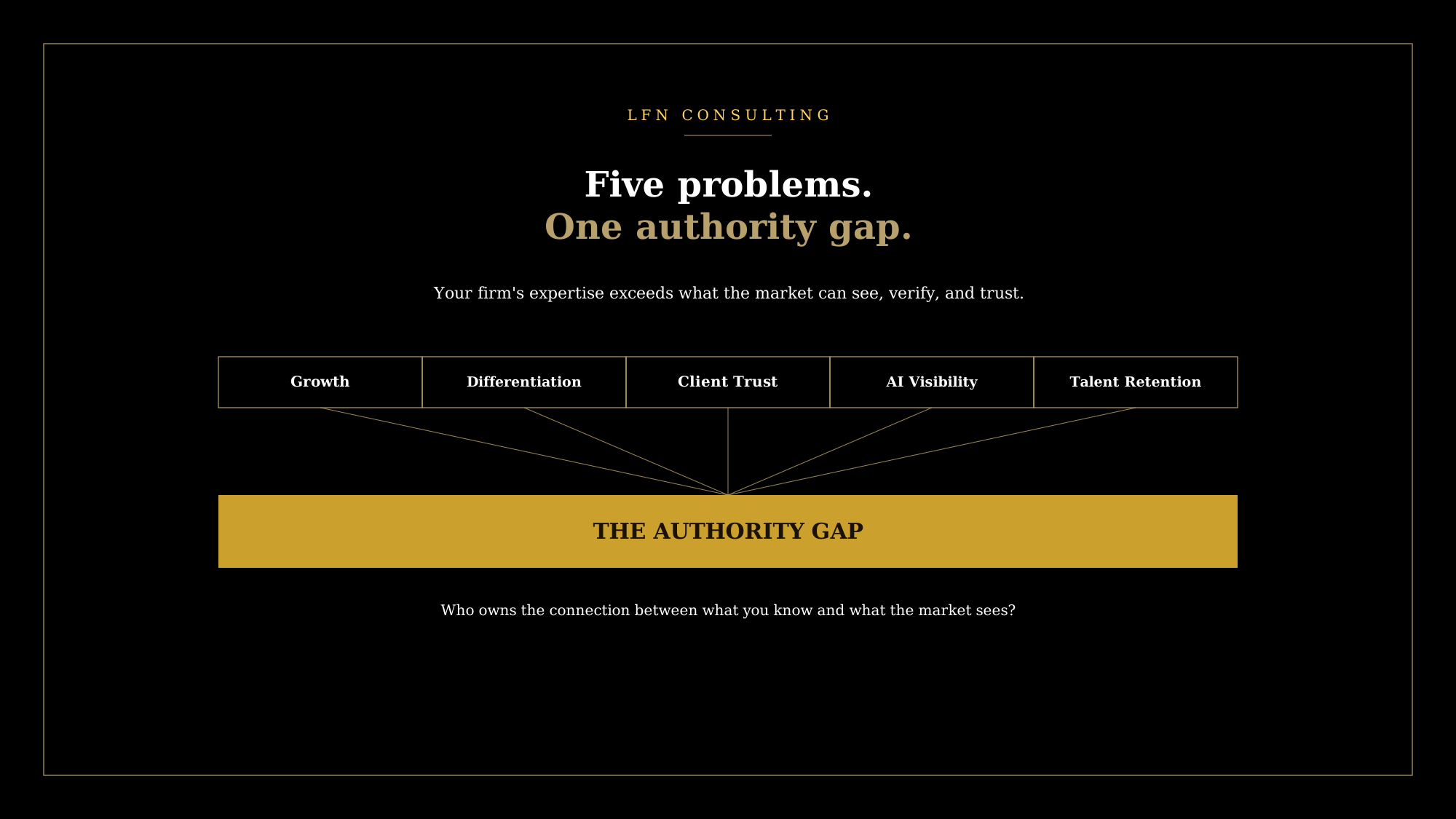
Here's what I don't hear anyone saying out loud: effort without architecture doesn't compound. It just repeats.
A firm can publish twice as much content, attend twice as many conferences, hire twice as many salespeople — and still be exactly where it started, because none of that activity was ever connected to anything else.
Trust that nobody owns doesn't compound. It leaks. It shows up strong in one place and completely absent in another, and buyers notice the gap even when they can't name what's causing it. That fragmentation is exactly why trust has to leave evidence wherever a buyer might encounter the firm.
That's the part almost no one is saying plainly: your competitors aren't beating you because they're better. They're beating you because they're more findable, more verifiable, and more consistent — three things that have almost nothing to do with how good the work actually is.
I spent fourteen years watching this up close, inside a professional services firm that grew from $52 million to $241 million, expanding from three markets to eight. Nobody in that growth ever came from one department pulling harder.
It came from making sure the people behind the buy encountered the same story no matter where they looked for it. That experience behind the results became the foundation for how I think about authority today.
Buyers don't experience your org chart. They experience three questions. They rarely say these out loud. But every buying decision, in every industry I've worked in, quietly runs through the same sequence:
Can I find you?
Before a buyer ever picks up the phone, they've searched. Increasingly, they've asked AI. A few months ago, out of curiosity, I asked the same question about executive visibility to four different AI engines on one afternoon — ChatGPT, Claude, Perplexity, and Gemini.
By that evening, three strangers had reached out, on three different platforms, having never spoken to me. They weren't reacting to a pitch. They were reacting to what was already findable.
Forrester has reported that 94% of B2B buyers now research extensively online before ever engaging a salesperson directly. That statistic isn't describing marketing behavior. It's describing the moment your next client forms an opinion of you — long before your team is in the room to shape it.
Can I trust you?
Findable isn't the same as credible. A former colleague of mine, Transaction Advisory partner, became someone deal-makers trusted before they'd sat down with him — not because he chased visibility, but because his expertise was consistent everywhere a buyer might encounter it: in his own writing, in how colleagues described him, in the deals he'd already closed being visible to the next prospective client.
By the time someone got him on the phone, they weren't deciding whether to trust him. They were confirming what they already believed.
That's the difference between being seen and being believed. Most organizations chase the first and wonder why it doesn't produce the second.
Should I choose you?
This is the only question a CRO's pipeline is built to answer — and it's the last one buyers ask, not the first. Relationships still matter. They always will. But relationships no longer carry the entire buying journey by themselves.
Today's strongest relationships are reinforced by what a buyer has already independently confirmed. The CRO manages pipeline performance. The Chief Brand and Trust Officer strengthens the trust signals that determine whether a qualified buyer chooses to enter that pipeline in the first place.
Those are two different jobs, and very few organizations have anyone intentionally doing the second one.
This is the piece almost nobody names.
Growth doesn't stall because expertise disappears. It stalls because expertise isn't being found, trusted, and chosen — three separate, sequential events, each of which can quietly fail without anyone noticing which one broke. The Authority Assessment is designed to help surface where that sequence is breaking down before another disconnected fix gets added.
Advertising decays the moment you stop paying for it. Campaigns end.
Algorithms change on someone else's schedule, not yours.
But trust, when it's actually owned by someone, is one of the few advantages left that compounds instead of resetting to zero. It gets stronger every time a buyer's independent research confirms what your best client already knows.
I grew up understanding what that looks like before I had language for it. My father helped launch USA TODAY, at a moment almost nobody believed a national paper built that way would work. Nobody handed that publication credibility. It earned it in public, one edition at a time, until skepticism quietly turned into loyalty.
I didn't realize until years later how directly that shaped how I think about brand: not as something you announce, but as evidence you accumulate, in front of people, on purpose.
That's the job I ended up building a firm around.
Not managing pipeline. Not producing more content. Making sure that when the people behind the buy go looking — and they are always already looking — what they find, whether they trust it, and whether they choose it all tell the same story.
I call that system Authority Infrastructure™. Not because I named it first.
Because it's what your exhausted CEO has actually been missing the whole time. Building Authority Infrastructure™ starts by identifying what needs to connect, then building the system around it.





.jpg)