Every executive owns a function.
The CRO owns pipeline. The CFO owns financial performance. The COO owns execution. The CHRO owns talent. The CMO owns demand.
The Chief Brand and Trust Officer owns the trust signals that determine whether buyers enter the pipeline in the first place.
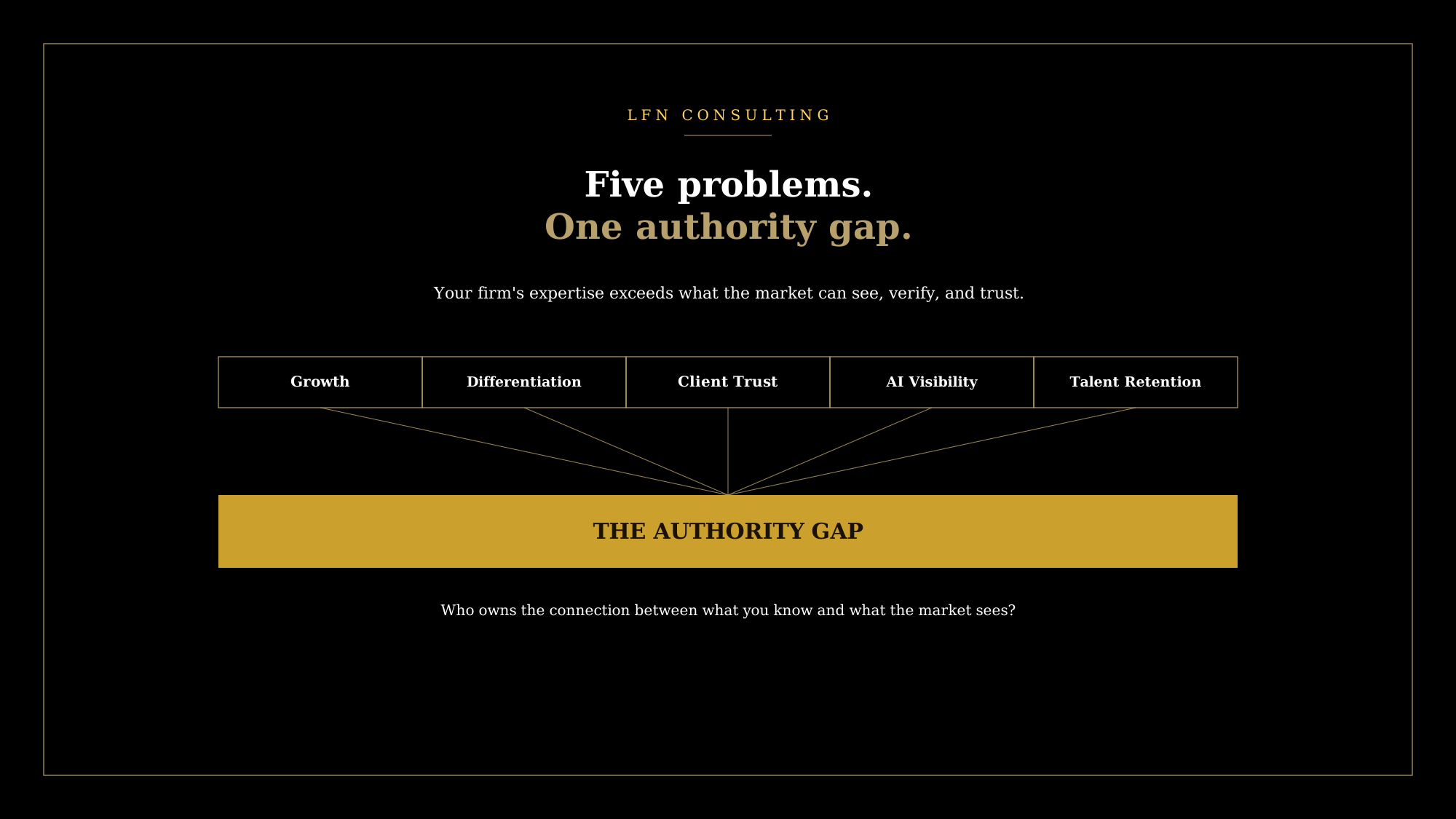
Yet in most organizations, no one intentionally connects those functions. That's where growth begins to fragment. Authority Infrastructure™ is designed to connect those functions into one system, beginning with an Authority Snapshot™ of where trust is strong, fragmented, or missing.
I've spent my career sitting at the intersection of corporate brand, employer brand, executive visibility, and communications. That vantage point taught me something most single-function leaders never see:
Activity isn't momentum
An organization can publish more, attend more conferences, and spend more on outreach than it ever has, and still lose ground, because none of that activity was ever connected to whether buyers actually trusted what they found.
The biggest misconception leaders have about growth today is that what worked yesterday will keep working today.
Buyer behavior has changed. Doubling down on growth directors, new technology, and heavier sales and marketing spend addresses the wrong problem. The gap isn't effort. Growth doesn't stall by accident. It stalls when effort fails to compound into trust buyers can find and verify.
High-growth organizations have already figured this out. They are building trust deliberately, as infrastructure, the same discipline they apply to every other function that drives revenue.
I know this because I made that adjustment myself, instead of doubling down on what used to work.
I've since watched the same adjustment play out across more than ninety CEOs and leaders, in industries that have almost nothing in common with each other except one thing. The people behind the buy are researching before they ever call. That perspective was built from inside the growth decisions, acquisitions, executive transitions, and organizational challenges leaders face every day.
Where This Shows Up
A law firm I worked with had exceptional attorneys and almost no market visibility. Once executive visibility became deliberate, referral quality improved and close times shortened. The expertise had always been there. Buyers simply could not find or verify it before.
A national leader in a specialized regulatory field, also a professor in his discipline, had years of expertise with almost none of it visible outside his own client base. Repurposing his webinars and speaking into published thought leadership put his expertise in front of the publications his next buyers were already reading, before he ever needed an introduction.
I hear a version of the same objection constantly in private equity: relationships close deals, not content. I understand the instinct. I have not found it to hold up.
The data backs that up plainly. Ninety-nine percent of B2B buyers say thought leadership is important or critical to their decisions.
Seventy percent of C-suite leaders have reconsidered a current vendor after reading a competitor's content, and a quarter of them ended or reduced that relationship because of it.
The buyers who never take a meeting — operating partners, portfolio company CFOs, legal and compliance teams — are shaping spend anyway. Relationships scale one relationship at a time. Trust that is visible and verifiable reaches the people your partners will never sit across a table from. The same principle applies to brand trust more broadly: belief is rarely created by messaging alone. The people closest to the experience help determine whether the story is trusted.
What Trust Actually Produces
I built this system inside a professional services firm that grew from $52 million to $241 million over fourteen years. If I could point to only one proof point, it would be this.
On an ordinary day, three prospective clients found their way to that firm in a single afternoon. Not through outreach. Not through referral. They had asked AI platforms who the trusted experts in the space were, and the firm's name was the answer.
Nobody sold them anything. The trust had already been built, in public, long before anyone was in the room to make the case for it.
Why This Matters Now
Buyers once confirmed trust after the first conversation. Today they require it before one ever happens.
The CRO manages pipeline performance. The Chief Brand and Trust Officer strengthens the trust signals that determine whether buyers enter the pipeline in the first place. Those two roles work together, and very few organizations have anyone intentionally doing the second one.
Most firms treat that as a marketing question or a sales question. It is neither. It is a structural one, and it is why growth stalls in organizations working harder than ever before.
Take the Authority Assessment to see where your authority is strong, where it is fragmented, and where gaps may be limiting growth.






.jpg)